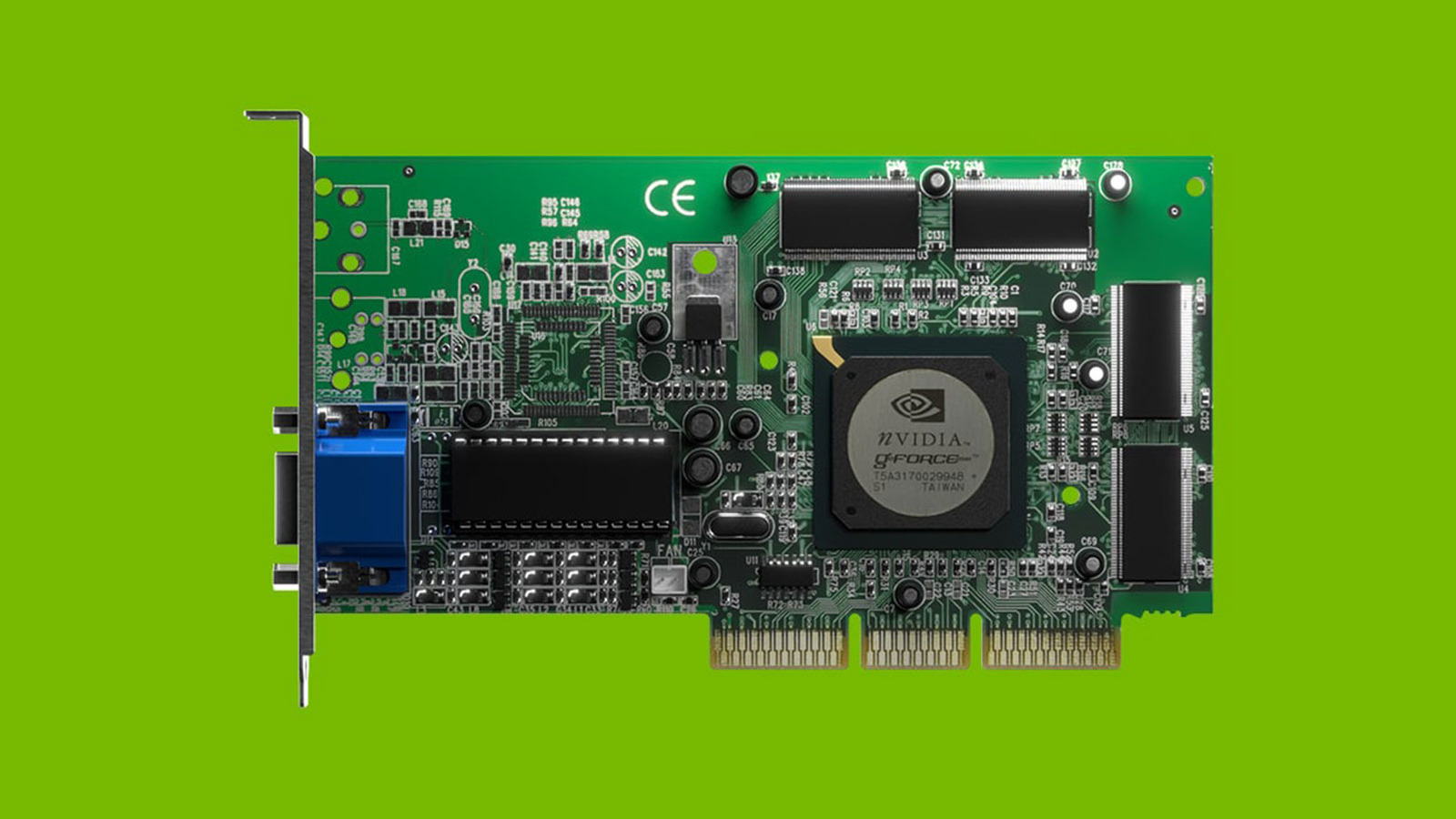
GeForce 256 marked the debut of NVIDIA's first GPU
AI-assisted summary based on reporting fromEngadget.About our reporting
Key Points
- •NVIDIA released the GeForce 256 on October 11, 1999.
- •The product was marketed as the world's first graphics processing unit.
- •It featured 17 million transistors and up to 64MB of memory.
Listen to this story (Audio briefing)
Back in 1999, the Wachowskis released The Matrix in March and people frequently discussed Y2K. During that same year, NVIDIA introduced its initial GeForce product, known as the GeForce 256. When compared to modern video card standards, the 256 appears quite modest. The hardware featured only 17 million transistors and up to 64MB of memory, depending on the specific model. By comparison, even the entry-level GeForce RTX 5050 surpasses those figures significantly with 16.9 billion transistors and 8GB of VRAM. Despite these modest early specifications, the GeForce 256 held historical significance. Alongside being the initial NVIDIA product to use the GeForce name, the business marketed it as the world's first graphics processing unit. Looking back, that choice permanently transformed the company and the entire industry. During 1999, the computer landscape differed greatly from modern times, whereas NVIDIA currently holds up to 95 percent of the gaming GPU market in recent years. At that time, NVIDIA operated as one of three primary participants in the sector alongside 3dfx and ATI Technologies. The leading force back then was 3dfx with its Voodoo series of 3D accelerators. Additionally, AMD had not yet acquired ATI, and would not do so for nearly seven more years. Even though 3dfx remained the market leader, NVIDIA had started eroding that position by launching its RIVA TNT graphics card in 1998. The TNT 2 arrived in early 1999 as another solid product from NVIDIA, which was followed later that year by the GeForce 256. The GeForce 256 launched on October 11, arriving just a few weeks after the official release of DirectX 7.0 in late September. Consequently, the 256 became the very first video card to fully support the new Microsoft API and the hardware transform and lighting capabilities added to Windows.
Analysis: The introduction of the GeForce 256 established a foundational shift in the computer graphics industry. By marketing it as the first graphics processing unit and pairing it with Microsoft's new DirectX 7.0 API, NVIDIA set a new direction that permanently altered its business trajectory.
Related Stories in AI & Tech
More in AI & Tech →
Smartphone battery life: how to charge your device
Smartphone batteries are lithium-ion and degrade over time based on charging habits and temperature.

Mechanical vs. membrane keyboards: A comparison
Membrane keyboards use a flexible layer of plastic and rubber to register keystrokes.

Smart TV lifespan and how long displays last
On average, a new smart TV can last from seven to 10 years.

Intel Arc GPUs: Are they still worth buying in 2026?
Intel launched its Arc GPU lineup in 2022, initially facing criticism for poor drivers and system instabilities.

Old iPads can replace costly smart gadgets
An old iPad can replace expensive gadgets costing between $150 and $300.

PlayStation 5 Pro PC build cost and comparison
Sony's PlayStation 5 Pro costs up to $900 before add-ons.
Want to Work Remotely for US & Global Tech Companies?
400+ verified remote positions in AI engineering, cloud development, design, and executive leadership are hiring now worldwide. Fast-track direct application with guaranteed employer delivery.
Subscribe to Our Daily AI & Market Briefing
Get our curated daily news brief, clear market takeaways, and essential video dispatches delivered directly to your inbox.