Ars Technica home offices vary from minimal to maximal
AI-assisted summary based on reporting fromArs Technica.About our reporting
Key Points
- •Ars Technica has never had a single central office since starting in 1998.
- •Staff workspaces range from minimalist laptop setups to heavily decorated areas.
- •One staff member uses a basic monitor, a work laptop, and a standing desk.
Listen to this story (Audio briefing)
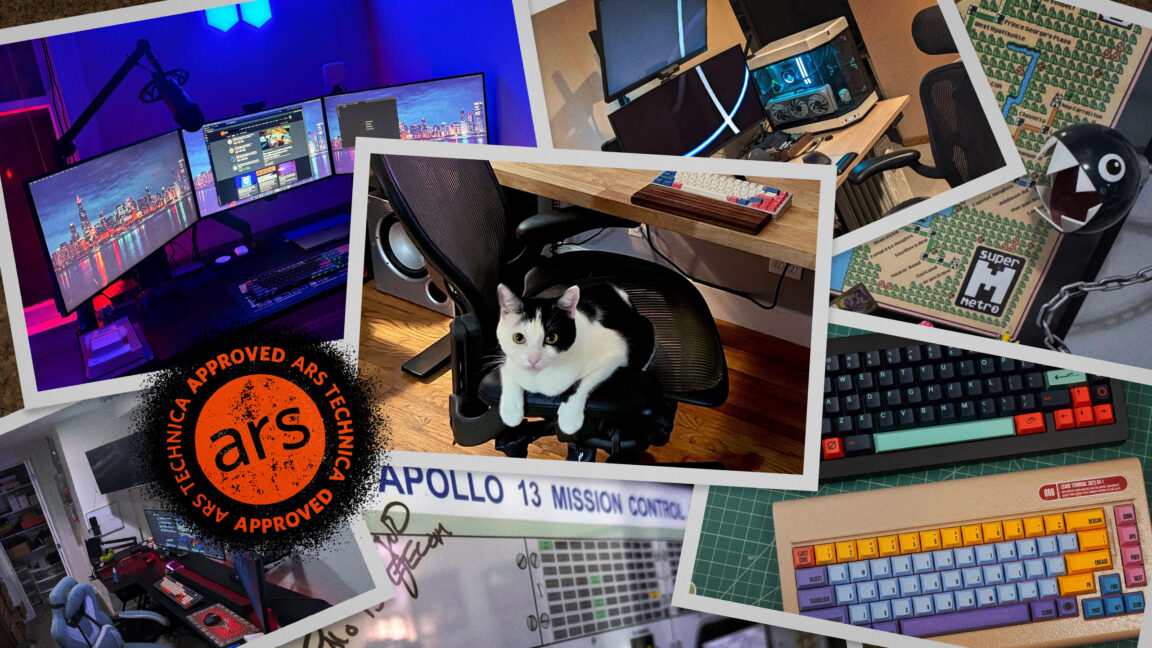
Ars Technica has operated using a remote working setup since its beginnings in 1998. The organization has never maintained a single central office, allowing employees to avoid commuting and traffic issues entirely. As staff members step away from their desks for a few days to spend time with family and friends, the publication offered a look inside various home workspaces.
Employee office setups span multiple locations including basements, dens, spare bedrooms, apartment corners, and lofts. These spaces range widely in style, extending from minimalist arrangements featuring only a laptop and a monitor up to maximalist spaces filled with collected items. One staff member living in a New York City apartment sets up a workstation in a small living corner, while occasionally moving to local cafes or coworking spaces.
This specific workspace utilizes a basic monitor display alongside a work laptop configuration. The monitor rests on a stack of several books, including a history of the Roman Republic by Mary Beard. Additional equipment plugged into the work laptop includes a Lekvey Ergonomic Mouse and a Logitech K380 keyboard, which is also brought to public workspaces. A personal Apple M4 MacBook Air sits to the side, accompanied by an old pair of Sennheiser HD 518 headphones used for listening to music.
The desk setup includes a simple standing desk that is difficult to change positions on, a wooden chair from Ikea, and an ergonomic chair. Desk accessories feature coasters, a tea container used as a pen holder, a painted dinosaur sculpture, two versions of a matching game, and a pair of Powerblock dumbbells tucked underneath.
Analysis: Examining remote workspaces offers a personal look at how media organization employees manage their daily routines outside of a traditional corporate office environment. These diverse setups demonstrate that remote work arrangements can adapt to various living spaces and personal preferences.
Related Stories in AI & Tech
More in AI & Tech →
Smartphone battery life: how to charge your device
Smartphone batteries are lithium-ion and degrade over time based on charging habits and temperature.

Mechanical vs. membrane keyboards: A comparison
Membrane keyboards use a flexible layer of plastic and rubber to register keystrokes.

Smart TV lifespan and how long displays last
On average, a new smart TV can last from seven to 10 years.

Intel Arc GPUs: Are they still worth buying in 2026?
Intel launched its Arc GPU lineup in 2022, initially facing criticism for poor drivers and system instabilities.

Old iPads can replace costly smart gadgets
An old iPad can replace expensive gadgets costing between $150 and $300.

PlayStation 5 Pro PC build cost and comparison
Sony's PlayStation 5 Pro costs up to $900 before add-ons.
Want to Work Remotely for US & Global Tech Companies?
400+ verified remote positions in AI engineering, cloud development, design, and executive leadership are hiring now worldwide. Fast-track direct application with guaranteed employer delivery.
Subscribe to Our Daily AI & Market Briefing
Get our curated daily news brief, clear market takeaways, and essential video dispatches delivered directly to your inbox.